
How to Prepare Your Product Data for Digital Product Passports
Prepare your product data for Digital Product Passports with this practical guide covering identifiers, BOMs, suppliers, documents and environmental data.
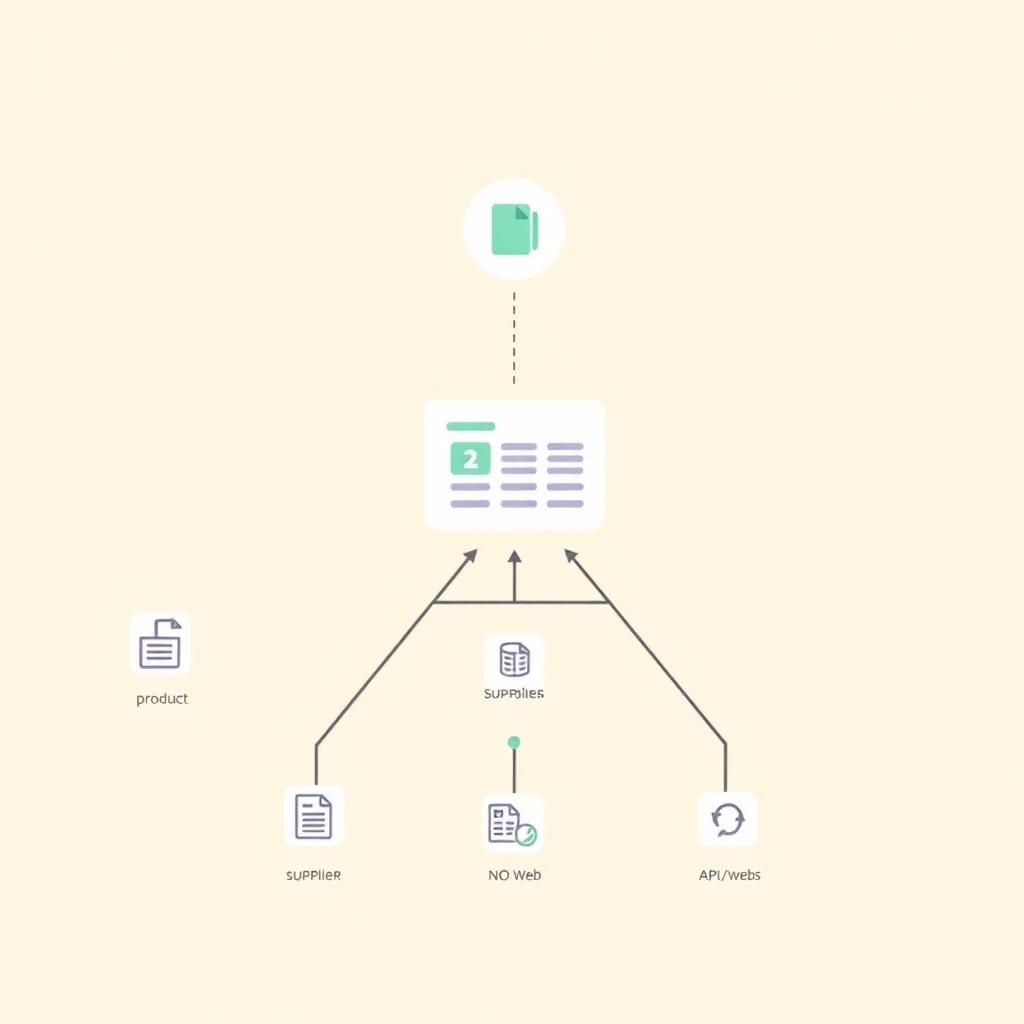
The best way to prepare for Digital Product Passports is not to start with the QR code. Start with the data behind it. For many manufacturers, product information currently exists across ERP systems, spreadsheets, PDFs, supplier emails and individual employees. DPP preparation provides an opportunity to structure that information.
This guide walks through ten practical steps to prepare your product data for DPP, LCA and other compliance workflows. See how EasyLCA structures product data or book a demo to get started.
Step 1: Create reliable product identities
Every product needs a reliable identity. Define:
- Product ID
- Model
- Variant
- Version
- Batch or serial information where relevant
Avoid relying entirely on product names. Names change and duplicates occur. Identifiers provide a more reliable foundation.
Step 2: Structure your BOM
Create a machine-readable Bill of Materials. Instead of a single line such as "Housing – aluminium – Supplier A", structure information into individual fields:
- Component: Housing
- Material: Aluminium
- Mass: 4.2
- Unit: kg
- Supplier: Supplier A
- Geography: Sweden
Structured information can be reused much more easily. Learn what data belongs in a DPP.
Step 3: Connect suppliers
Every relevant material or component should be connectable to its supplier. This allows companies to:
- Request missing data
- Update information
- Assess data quality
- Maintain traceability
Supplier relationships become a central part of the product-data model rather than a side note in a spreadsheet.
Step 4: Connect environmental datasets
Materials and processes can be mapped to environmental datasets. This enables LCA calculations and provides a connection between physical product composition and environmental performance.
EasyLCA can help automate this mapping so that environmental impact calculations stay connected to the product structure.
Step 5: Organise documents
Connect supporting documents directly to products, components or suppliers. Examples include:
- Certificates
- Declarations
- Test reports
- EPDs
- Technical documentation
- Policies
Step 6: Track versions
Products change. A material may be replaced. A supplier may change. A component may become lighter. Your data system should record which information applies to which product version. Otherwise historical environmental and compliance results can become unreliable.
Step 7: Record data sources
Knowing a value is useful. Knowing where the value came from is even more useful. Store information about:
- Source
- Supplier
- Dataset
- Document
- Date
- Methodology
- Data quality
Step 8: Design access rights
Not every user should necessarily see every field. Separate information into appropriate access levels. DPP regulations may also require some fields to be public while others remain restricted.
Step 9: Make information accessible through APIs
Human-readable product pages are useful. Machine-readable interfaces are equally important. Structured APIs make it possible for product information to be reused across systems and for DPP data carriers to resolve correctly.
Step 10: Add the data carrier
Once the architecture exists, a QR code or other applicable data carrier can connect the physical product to its digital identity. The data carrier should be the last step, not the first.
DPP readiness checklist
Before implementing DPP, ask:
- Does every product have a stable identifier?
- Is our BOM structured?
- Are materials connected to suppliers?
- Can we request missing supplier information?
- Can documents be connected to products?
- Can we calculate environmental impacts?
- Can we manage product versions?
- Can we control access rights?
- Can systems access data programmatically?
- Can a physical product resolve to its digital information?
If several answers are no, product-data preparation should probably begin before the final DPP implementation.
The key takeaway
A Digital Product Passport should be the output of good product-data management, not the starting point. Build reliable product information first. Then the same infrastructure can support DPP, LCA, customer requests and other product compliance workflows.
Start structuring your product data in EasyLCA or book a demo to see how the platform supports DPP preparation.
Frequently Asked Questions About Life Cycle Assessments
Ready to run your first LCA?
See how EasyLCA turns a Bill of Materials into an ISO-aligned Life Cycle Assessment in minutes.