
One Product, Many Regulations: Why Companies Need a Single Source of Product Data
LCA, DPP, PPWR and product compliance often rely on the same underlying information. Learn why companies need a single source of product sustainability data.
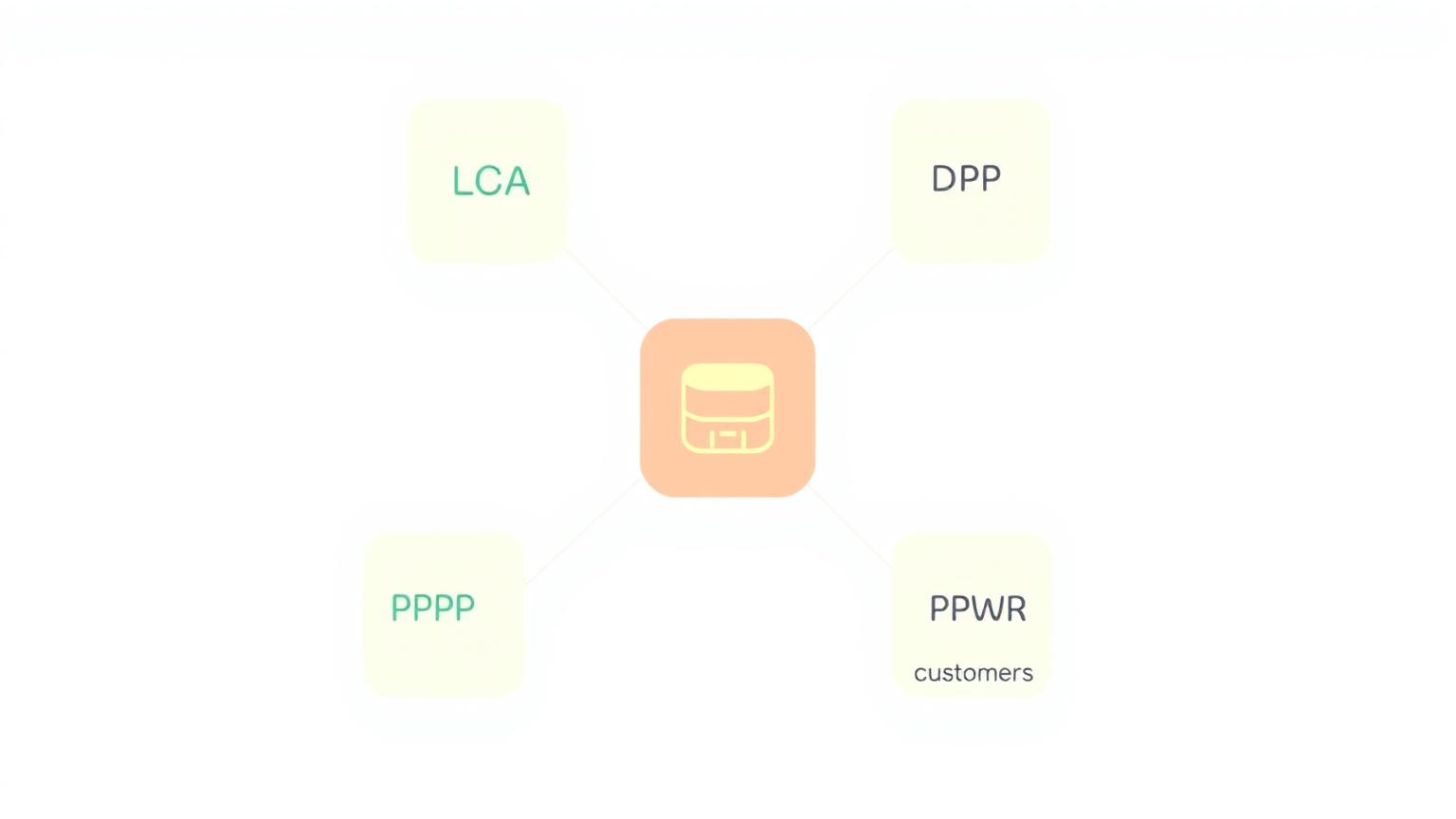
Companies often manage sustainability requirements as separate projects. One spreadsheet for LCA. Another system for compliance. Supplier questionnaires in email. Packaging information somewhere else. Certificates stored in folders. Digital Product Passport data in another database. But these requirements often depend on the same underlying product information. The better long-term approach is to manage the product data once and reuse it across multiple requirements. See how EasyLCA structures product data or book a demo to explore the workflow.
This article explains why a single source of product data matters, what it looks like, and how it can support LCA, DPP, PPWR and future requirements.
What information is reused?
Consider a simple manufactured product. The company may already know:
- product ID
- BOM
- materials
- material quantities
- suppliers
- manufacturing location
- packaging
- transport
- documents
The same data supports many sustainability use cases
Now consider several sustainability use cases.
- LCA needs materials, quantities, processes, energy and transport.
- Product Carbon Footprint uses much of the same inventory information but focuses on climate impact.
- Digital Product Passport can require structured product, sustainability, circularity and compliance information depending on applicable product rules.
- PPWR requires companies to understand relevant packaging characteristics and requirements.
- Customer requests: Customers increasingly ask suppliers for product environmental and compliance information.
The underlying data overlaps significantly.
What does a single source of truth look like?
Instead of building a separate spreadsheet for every regulation, the goal is to build a reusable product data foundation:
Product → Structured product data → Multiple outputs.
- BOM, suppliers and documents all connect to a central product record.
- Environmental data flows from that product record.
- LCA, DPP, PPWR and customer reporting become different ways of using the same information.
Why is this better?
A single source of truth for product data offers several practical advantages:
- Less duplicate work: A material weight should not need to be entered independently for five different compliance projects.
- Better traceability: Information can remain connected to its supplier, dataset or document.
- Easier updates: If a product changes, dependent calculations and requirements can be reviewed.
- Better data quality: Teams work from shared information instead of maintaining conflicting spreadsheets.
- Faster compliance: New requirements can reuse information that already exists.
Product versions matter
A single source of truth does not mean storing only the latest value. Products evolve.
A robust system should understand the chain: Product → Version → Composition → Data → Results.
This allows companies to maintain historical traceability and compare different versions of the same product.
Supplier data should be part of the same system
Suppliers are a major source of product information. Instead of collecting supplier information independently for every regulation, request structured information and connect it to the relevant product or component. Then reuse it where appropriate.
Documents are still important
Structured data does not eliminate documents. Certificates, declarations and technical reports remain valuable evidence. The difference is that documents become connected to structured objects.
- Supplier A → Aluminium housing → Recycled content 65% → Certificate.pdf
AI makes structured product data even more valuable
AI can help organisations in many ways when it operates on reliable, structured and traceable information:
- Extract information from documents
- Map BOM materials to datasets
- Identify missing data
- Answer customer requests
- Classify documents
- Identify potentially relevant requirements
The goal should therefore not be to replace product data management with AI. It should be to use AI to make good product data dramatically easier to create and maintain.
What should companies build?
Think in terms of a reusable product-data graph. Products connect to components, which connect to materials, suppliers, documents, environmental datasets, calculations and compliance requirements.
This creates a foundation that can support requirements that do not even exist yet.
- Products
- Components
- Materials
- Suppliers
- Documents
- Environmental datasets
- Calculations
- Compliance requirements
The key takeaway
The future of product sustainability is not one tool per regulation. It is one product-data foundation → many sustainability and compliance applications.
LCA, DPP, PPWR and future requirements should become different ways of using the same trusted product information. For manufacturers, building that foundation may ultimately be more valuable than implementing any individual compliance requirement in isolation.
Ready to build a single source of product data? See how EasyLCA works or book a demo.
Frequently Asked Questions About Life Cycle Assessments
Ready to run your first LCA?
See how EasyLCA turns a Bill of Materials into an ISO-aligned Life Cycle Assessment in minutes.